Green Flower Digital Paper Patterns: A Versatile Creative Resource for Diverse Projects
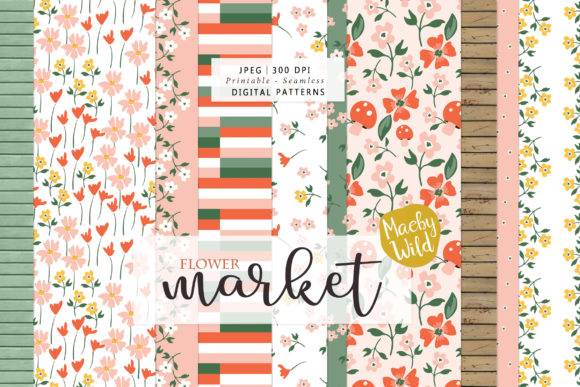
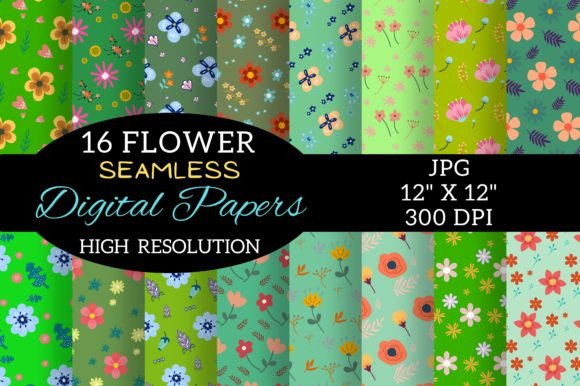
High-quality digital paper patterns have evolved from niche design assets into essential tools across creative disciplines. Among the most thoughtfully curated collections available today is the Green Flower Digital Paper Patterns set — a cohesive, technically robust suite of 16 floral-themed backgrounds designed not just for aesthetics, but for real-world functionality. Unlike generic floral repeats or low-resolution downloads, this collection prioritizes precision, adaptability, and professional-grade output — making it equally valuable to a classroom teacher designing seasonal lesson materials, a small-business owner crafting branded invitations, or a mixed-media artist layering textures in digital collages.
What You Receive: Technical Specifications That Enable Real-World Use
The core offering consists of a single zipped file (38 MB) containing 16 individual JPG files — each measuring exactly 12 x 12 inches at 300 dpi resolution (4000 x 4000 pixels). This uniformity isn’t arbitrary; it reflects deliberate alignment with industry standards for print production and digital layout workflows. At 300 dpi, every pattern retains crisp clarity when printed on standard scrapbook paper, invitation cardstock, or even large-format matte posters. The 12-inch square dimension ensures seamless compatibility with common design software canvases — whether you’re working in Adobe Photoshop, Affinity Designer, Canva Pro, or free alternatives like GIMP or Photopea.
Each JPG file is saved in RGB color mode, optimized for screen-based preview and accurate CMYK conversion during commercial printing. No watermarks, no layered PSD files to navigate — just clean, ready-to-use raster assets. This simplicity reduces friction in time-sensitive projects: a wedding planner can drop a background into an invitation template in under two minutes; an educator can export a flower-patterned worksheet header without adjusting scaling or bleed settings.
Why Floral Motifs Endure — And Why Green Tones Stand Out
Floral patterns carry broad cultural resonance: they evoke growth, renewal, celebration, and natural harmony. But not all floral papers function equally well across contexts. Many commercially available sets rely heavily on saturated pinks, reds, or pastel yellows — colors that can clash with text overlays or fade unpredictably when printed on uncoated stock. The Green Flower Digital Paper Patterns collection distinguishes itself through intentional chromatic restraint. Dominant hues include sage, olive, eucalyptus, and muted forest tones — shades proven to enhance readability when paired with black or white typography, and to harmonize with eco-conscious branding, botanical education materials, or wellness-related content.
This green-forward palette also supports accessibility goals. High-contrast combinations (e.g., dark charcoal text over light mint paper) meet WCAG 2.1 AA standards for visual legibility — a consideration often overlooked in decorative digital paper libraries. Designers working on inclusive educational handouts or community health flyers will find these backgrounds inherently more adaptable than high-saturation alternatives.
Hobbyists and Crafters
For scrapbookers and cardmakers, the 12×12 inch size matches standard album page dimensions — eliminating the need for tiling or resizing. Each pattern’s consistent scale allows for subtle texture layering: a soft fern motif works as a full-page background, while a tighter leaf repeat can be cropped and used as a border element. Because all files are high-resolution JPGs, users avoid pixelation when digitally cutting intricate shapes using Cricut Design Space or Silhouette Studio.
Educators and Curriculum Developers
Teachers frequently repurpose decorative elements for visual scaffolding — think themed vocabulary walls, science unit headers, or mindfulness journal covers. The green botanical theme supports cross-curricular connections: biology units on plant anatomy, environmental literacy projects, or SEL (social-emotional learning) activities centered on growth metaphors. Since the files require no subscription or licensing beyond the initial download, schools with limited edtech budgets can deploy them across grade levels without compliance concerns.
Small Business Owners and Freelancers
Service-based entrepreneurs — from yoga instructors to boutique florists — use these papers to build cohesive brand touchpoints. A single background can serve as the foundation for a newsletter banner, a printable client welcome guide, and social media story templates — ensuring visual continuity without requiring custom illustration. Importantly, the absence of trademarked floral species (e.g., no identifiable rose cultivars or protected botanical illustrations) minimizes legal risk when used commercially.
Researchers and Academic Presenters
While often overlooked, presentation design benefits significantly from subtle, non-distracting backgrounds. These patterns provide gentle visual interest behind data charts or qualitative quotes — unlike busy photographic backdrops that compete for attention. Researchers presenting at conferences can embed a soft green floral texture behind title slides to convey thematic alignment (e.g., sustainability, horticultural studies, or ecological psychology) without compromising slide readability.
Workflow Integration: How These Files Fit Into Existing Processes
Unlike vector-based pattern swatches or SVG tile sets, these JPGs are intentionally raster-based — a strategic choice that enhances interoperability. Most desktop publishing and web design tools accept JPG natively, with no plugin dependencies. In Microsoft PowerPoint or Google Slides, users can insert a background via “Set Background” > “Picture or texture fill,” then adjust transparency if needed for text legibility. In Canva, dragging a JPG onto the canvas automatically creates a background layer that resizes proportionally with the document.
For print-on-demand services (like Printful or Gelato), the 300 dpi resolution meets minimum requirements for sharp physical output. Users report successful results on products ranging from hardcover journals to fabric tote bags — provided the base material supports fine detail reproduction. Notably, the lack of embedded metadata or EXIF tags streamlines bulk uploads to e-commerce platforms, avoiding potential ingestion errors.
Considerations for Optimal Use
While highly versatile, these patterns do require mindful implementation. Because they’re non-repeating raster files (not seamless tiles), users intending to create infinite backgrounds must manually duplicate and align edges — a task best handled in image editors with grid snapping. Those needing true seamless tiling may supplement with basic cloning techniques or use the patterns as base layers beneath transparent overlay textures.
Color accuracy varies slightly between calibrated monitors and consumer-grade printers. For mission-critical color matching (e.g., brand-aligned stationery), soft-proofing against a specific printer profile is recommended before final output. Additionally, while the collection avoids copyrighted botanical art, users should still verify local trademark regulations if applying patterns to merchandise intended for resale — particularly in markets with strict design patent enforcement.
Comparative Context: Where Green Flower Digital Paper Patterns Fit in the Ecosystem
The digital paper market includes everything from free blog-downloaded PNGs (often 72 dpi, with inconsistent sizing) to premium subscription libraries offering thousands of patterns but requiring ongoing fees. The Green Flower Digital Paper Patterns occupy a distinct middle ground: one-time acquisition, zero usage restrictions, and technical consistency rarely found in freemium offerings. Compared to AI-generated floral patterns — which often suffer from unnatural petal symmetry or inconsistent lighting — these files reflect human-led curation, with balanced negative space and organic variation across the 16 designs.
This intentionality extends to file management. Rather than bundling dozens of near-identical variants (e.g., 10 versions of “light green daisy”), the set offers distinct compositional approaches: some emphasize stem movement, others focus on clustered blooms, and several use negative space strategically to support text placement. Such diversity enables users to match pattern energy to project intent — a bold vine motif for energetic youth programming, a delicate sprig pattern for elegant bridal stationery.
Long-Term Value Beyond First Use
Digital assets gain value through reuse, adaptation, and reinterpretation. These 16 files serve as foundational elements for iterative design work. A graphic designer might extract a single leaf shape using selection tools and convert it into a custom brush for Procreate. A textile student could import a pattern into Spoonflower’s design interface to prototype fabric prints. A developer building an educational app might sample color values from the JPGs to generate accessible UI palettes using tools like ColorBox or Stark.
Moreover, because the files are resolution-fixed rather than scalable vectors, they encourage thoughtful composition decisions — discouraging lazy stretching or distortion that degrades visual integrity. This constraint, paradoxically, fosters stronger design habits: users learn to evaluate scale, rhythm, and contrast deliberately, rather than relying on infinite scalability to mask poor layout choices.
Final Thought: Utility Rooted in Intention
The enduring relevance of the Green Flower Digital Paper Patterns lies not in novelty, but in fidelity to purpose. Every specification — the 300 dpi resolution, the 12×12 inch dimensions, the green-dominant botanical palette — serves a functional need observed across classrooms, studios, and small offices. They don’t attempt to replace illustration or photography; instead, they provide reliable, respectful substrates upon which other creative work can flourish. In an era where digital clutter multiplies daily, their clarity, consistency, and quiet versatility make them less of a decorative add-on — and more of a quietly indispensable tool.