Leopard Print Tie Dye Patterns
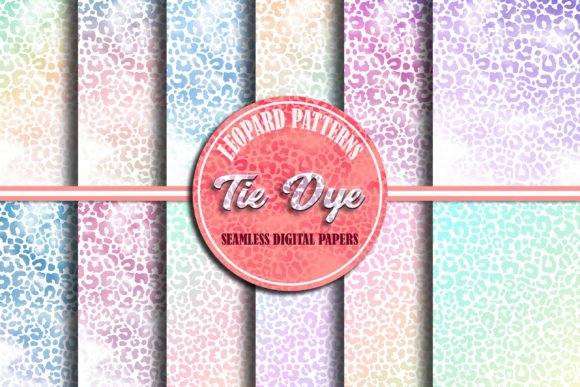
If you’ve ever tried to add a little boldness and softness at the same time—think playful energy with a whisper of elegance—you know how tricky that balance can be. That’s exactly where Leopard Print Tie Dye Patterns step in: not your grandma’s leopard, not your college dorm tie-dye—but a fresh, intentional fusion. These aren’t mass-produced clipart repeats or low-res filters. They’re 12 original, hand-crafted seamless patterns that blend wildcat attitude with dreamy pastel tones and organic dye flow.
What You’re Actually Getting (and Why It Matters)
You’ll receive 12 high-resolution files—each 4000px × 4000px at 300dpi—in both PNG (with transparent background) and JPEG formats. That means no pixelation when you scale up for a full-length dress fabric print, no jagged edges when you tile across a wallpaper mockup, and no guessing whether your notebook cover design will hold up under real-world printing.
The “seamless” part isn’t just jargon—it’s what makes these patterns *work*. When you repeat them edge-to-edge in design software (like Adobe Illustrator, Canva Pro, or even Affinity Designer), there’s no visible seam, no awkward mismatch at the tile boundary. That’s essential whether you’re screen-printing on cotton jersey, laying down vinyl for custom phone cases, or prepping a large-format wall mural for a boutique café.
Where These Patterns Show Up in Real Life
Fashion & Textiles: A freelance pattern designer used three of these patterns to develop a capsule collection of lounge sets—matching cropped hoodies and wide-leg pants—for a small LA-based brand. Because the repeats are seamless and high-res, her printer accepted the files without resizing or reformatting. No redraws. No delays. Just consistent, on-brand texture across every garment.
Stationery & Gifting: A wedding planner in Portland built custom invitation suites around the mint-and-cream leopard tie dye pattern—printing it subtly as a border on vellum overlays and using the same motif on foil-stamped gift tags. Guests didn’t just notice the design; they asked where she sourced it. (She linked directly to GN Shop in her vendor guide.)
Educational & Creative Tools: A middle school art teacher printed four of the patterns onto heavy cardstock, cut them into puzzle pieces, and used them for a lesson on pattern repetition, color theory, and cultural motifs. Students compared how leopard symbolism shifts across eras—and how dye techniques influence perception. The tactile, visual clarity of the high-res files made all the difference.
Digital & Marketing Use: A wellness coach redesigned her entire Instagram highlight covers using two contrasting patterns—one soft lavender-and-sage, one peach-and-cream—creating cohesion without monotony. She also embedded the same designs into Canva templates for client worksheets, giving her digital resources a polished, signature look that stood out in crowded DM inboxes.
Who Benefits—and How Their Needs Shape the Choice
A hobbyist embroiderer might download one pattern to trace onto linen tea towels—not for full coverage, but as a subtle watermark-like guide beneath delicate French knots. She values transparency (hence the PNG option) and clean edges so her stitching stays precise.
A small-batch ceramicist uses the patterns as decals on mugs and plates. She needs crisp 300dpi files because her transfer printer demands it—and she relies on the pastel palette to complement matte glazes without clashing. She doesn’t want “loud” leopard; she wants warmth, depth, and quiet confidence.
A blogger covering sustainable fashion tested these patterns against open-source alternatives. Her verdict? “These hold up at scale *and* retain subtlety—no muddy blending, no oversaturated spots. I could actually match them to real-life fabric swatches.” That kind of reliability matters when your audience trusts your aesthetic judgment.
What to Think About Before You Use Them
Not every leopard print tie dye pattern works for every project—even beautiful ones. Ask yourself:
- Is contrast needed? If you’re printing on dark fabric or deep-toned paper, lean toward patterns with higher-value highlights (like the sky-blue-and-lilac combo) rather than low-contrast greys or creams.
- How much “movement” does the context allow? A busy conference backdrop benefits from gentle, flowing dye lines. A children’s sticker sheet might need tighter, more defined spots for visual clarity at small sizes.
- Do you need licensing clarity? These patterns are for personal *and* commercial use—including resale items—so if you’re building a Shopify store selling printed totes or custom planners, you’re covered. Just check GN Shop’s current license terms at download (they’re straightforward and clearly stated).
Also worth noting: pastel doesn’t mean “faint.” These patterns carry tonal richness—soft yes, but never washed out. That’s intentional. Pastel leopard tie dye works precisely because it avoids cliché while keeping recognizability. You still get the rhythm of the spots, the organic bleed of the dye, and the unmistakable charisma of the print—just translated into something that feels current, calm, and considered.
Why This Fits Into Bigger Creative Habits
Most designers don’t buy patterns to “use a pattern.” They buy them to solve problems: How do I make this product line feel cohesive without being repetitive? How do I refresh my brand visuals without overhauling everything? How do I add personality to a client’s packaging without overwhelming their logo?
That’s where Leopard Print Tie Dye Patterns earn their place—not as decoration, but as infrastructure. They’re flexible enough for rapid prototyping in Figma, robust enough for production-grade output, and distinctive enough to become part of your visual vocabulary. You don’t have to commit to a full collection upfront. Start with one pattern on a single product—say, a limited-run journal series—and see how your audience responds. Then expand.
And if you like what you see? GN Shop adds new designs regularly—often inspired by user feedback and seasonal creative needs. Following the store isn’t about getting spammy updates. It’s about staying in sync with tools that evolve alongside how you actually work: thoughtfully, practically, and with room to experiment.