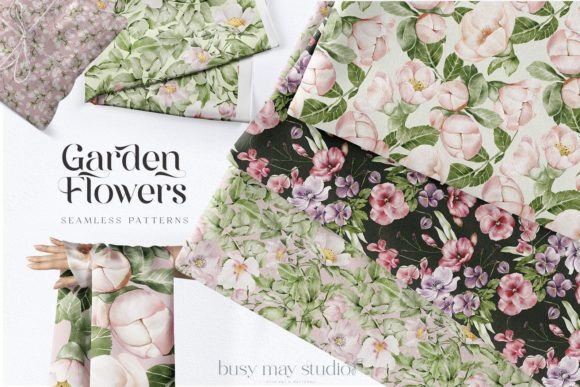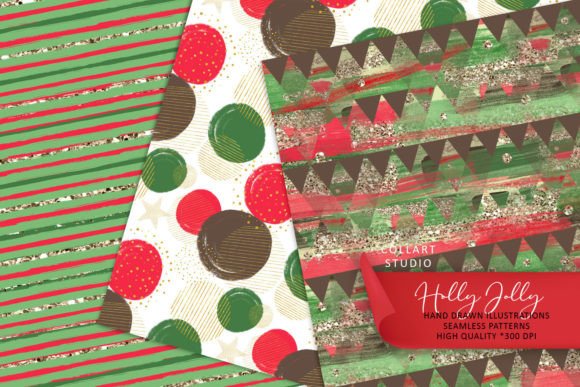
Floral Patterns, Seamless Papers. Roses
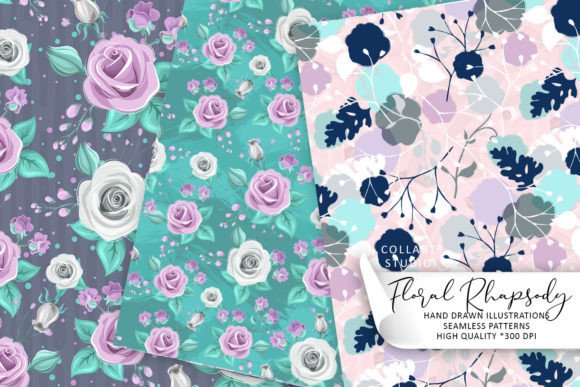
There’s a quiet shift happening in how creators approach visual design—not toward flashier tools or faster outputs, but toward intentionality, authenticity, and tactile warmth. In a digital landscape saturated with algorithm-generated motifs and overused stock assets, Floral Patterns, Seamless Papers. Roses stands apart: three original, hand-drawn and hand-painted digital papers by Collart Studio—each crafted with ink, watercolor, and careful observation of botanical form. They’re not templates. They’re starting points—with texture, rhythm, and quiet personality built in.
What Makes These Papers Different—And Why It Matters
Seamless papers are foundational in design workflows: they tile effortlessly across surfaces, scale without pixelation, and serve as backdrops, overlays, or structural elements. But most seamless patterns today fall into one of two categories—overly geometric (clean but impersonal) or generically floral (soft but forgettable). Floral Patterns, Seamless Papers. Roses bridges that gap. Each 12×12 inch paper is rendered at 300 dpi, optimized for both screen and print use—from delicate planner stickers to fabric-printed tote bags. More importantly, every petal, stem, and leaf was drawn by hand, then digitally refined to preserve gesture and variation. That means no two roses repeat identically; subtle shifts in line weight, pigment bleed, and negative space create organic movement—something AI-generated repeats simply can’t replicate.
This isn’t just aesthetic preference—it’s functional nuance. When you use these papers for web or blog design, the soft edges and natural gradients reduce visual fatigue compared to harsh vector repeats. For scrapbooking or decoupage, the watercolor texture integrates seamlessly with physical media like vellum, kraft paper, or pressed flowers. And because they’re delivered as high-resolution PNGs with transparent backgrounds (where applicable), they drop cleanly into Canva, Procreate, Adobe Illustrator, or even Cricut Design Space—no clipping masks or color correction needed.
How Creative Workflows Are Changing—And Where Hand-Drawn Papers Fit In
Over the past five years, the demand for “human-made” visuals has grown—not as nostalgia, but as a response to real workflow pressures. Freelancers juggle client revisions, platform algorithms, and shrinking timelines. Educators build printable resources while balancing accessibility and engagement. Small business owners craft brand-consistent invitations, social graphics, and product packaging—often solo. In each case, speed matters—but so does distinction. A generic rose pattern won’t help your wedding invitation stand out in a crowded inbox. A mass-produced background won’t reinforce the care behind your handmade soap label.
That’s where purpose-built, hand-drawn assets like Floral Patterns, Seamless Papers. Roses become strategic tools. They offer consistency (three coordinated papers, same style and palette) without rigidity (each has its own focal rhythm—tight clusters, trailing vines, or open-centered blooms). You’re not choosing *between* uniqueness and efficiency—you’re getting both. One paper might anchor a minimalist planner sticker sheet; another could underpin a full-page blog header; a third works as a subtle watermark on printable gratitude cards. No reworking, no licensing ambiguity—just three ready-to-deploy originals, fully owned.
Real Uses—Beyond the Obvious
Yes, these papers work beautifully for invitations and planner stickers—their most common applications. But their flexibility reveals itself in quieter, more practical ways:
- Web and blog design: Use one as a textured section divider between content blocks—especially effective for lifestyle, wellness, or small-batch brand sites where warmth supports trust.
- Print-on-demand products: Scale them for fabric prints (scarves, napkins) or stationery suites (thank-you cards, gift tags) without losing fidelity—thanks to their 300 dpi resolution and intentional negative space.
- Classroom and educator resources: Layer them beneath student name tags, reading logs, or behavior charts to add visual calm without distraction—ideal for neurodiverse learners who benefit from gentle, non-repetitive backgrounds.
- DIY packaging: Print onto kraft or linen cardstock, then cut and fold into custom boxes or gift wrap liners—watercolor textures hold up well to scoring and embossing.
- Hybrid analog-digital journals: Import into GoodNotes or Notability as notebook covers or page dividers, then annotate directly over the floral base—creating a bridge between handwritten reflection and digital organization.
Note: These aren’t clip art packs or SVG bundles. They’re cohesive, context-aware papers—designed to function *as surfaces*, not just decorations. That distinction changes how you think about layering, typography pairing, and contrast. A serif font sits differently on a watercolor rose repeat than on a flat-color background—and that difference affects readability, mood, and perceived quality.
Why Hand-Drawn Still Resonates—Especially Now
It’s easy to assume digital tools have made hand-drawn assets obsolete. But look closely at what’s gaining traction: illustrated newsletters, tactile branding, slow-design movements, and platforms like Etsy or Instagram where authenticity signals value. Viewers don’t just see a rose—they register the slight tremor in a stem line, the uneven saturation of a petal edge, the evidence of human attention. That resonance isn’t sentimental—it’s cognitive. Studies in visual processing show people retain information longer when design includes organic irregularity, because it mirrors how we experience the physical world.
Collart Studio’s approach reflects this understanding. Their roses avoid rigid symmetry or clinical precision. Instead, they lean into asymmetry, overlapping forms, and layered washes—qualities that translate across mediums without flattening. When printed on textured paper, the digital file’s soft edges echo the substrate. When overlaid with semi-transparent text, the pigment variations create natural contrast zones—guiding the eye without bold fonts or heavy shadows.
Getting Started—Without Overcomplicating It
You don’t need advanced design skills to use Floral Patterns, Seamless Papers. Roses effectively. Start small:
- Download one paper and open it in your preferred editor.
- Resize it to fit a standard planner sticker sheet (e.g., 4×6 inches), then duplicate and tile manually—or use your software’s pattern fill feature.
- Add simple black-and-white text labels using a clean sans-serif. Notice how the rose motif recedes, supporting rather than competing.
- Export as PNG and test print on your home printer. Adjust brightness/contrast if needed—these papers were designed to hold detail at both light and mid-tone values.
Once comfortable, experiment with blending modes (Multiply works well for overlaying on photos; Overlay adds gentle luminosity). Try reversing one paper to create a “negative space” version—then use it as a subtle watermark behind testimonials or quotes. The goal isn’t perfection—it’s responsiveness. Let the paper guide your choices, not the other way around.
A Resource That Grows With Your Practice
Unlike trend-dependent assets that date quickly, hand-drawn floral papers rooted in botanical observation age gracefully. Roses carry cultural weight—across eras and regions—but these interpretations avoid cliché through specificity: the curl of a bud, the serration of a leaf, the way light catches dew on a petal edge. That groundedness makes them adaptable across seasons, markets, and mediums.
Whether you’re designing a boutique skincare label, prepping a classroom welcome packet, or building a personal brand around mindful creativity, Floral Patterns, Seamless Papers. Roses offers continuity—not repetition. Three papers, one consistent voice. No subscriptions. No usage limits. Just original, high-resolution files you own outright—ready to support your next project, your next pivot, your next idea.
Click “Zoom” to examine the fine details: the granulation in the watercolor wash, the confidence in the ink line, the deliberate spacing that allows each rose to breathe. What you’re seeing isn’t just decoration. It’s quiet craftsmanship—translated into a tool that fits, thoughtfully, into how you actually work.